Wednesday, August 30, 2017

Hiking Mount Longonot

By Anthony:

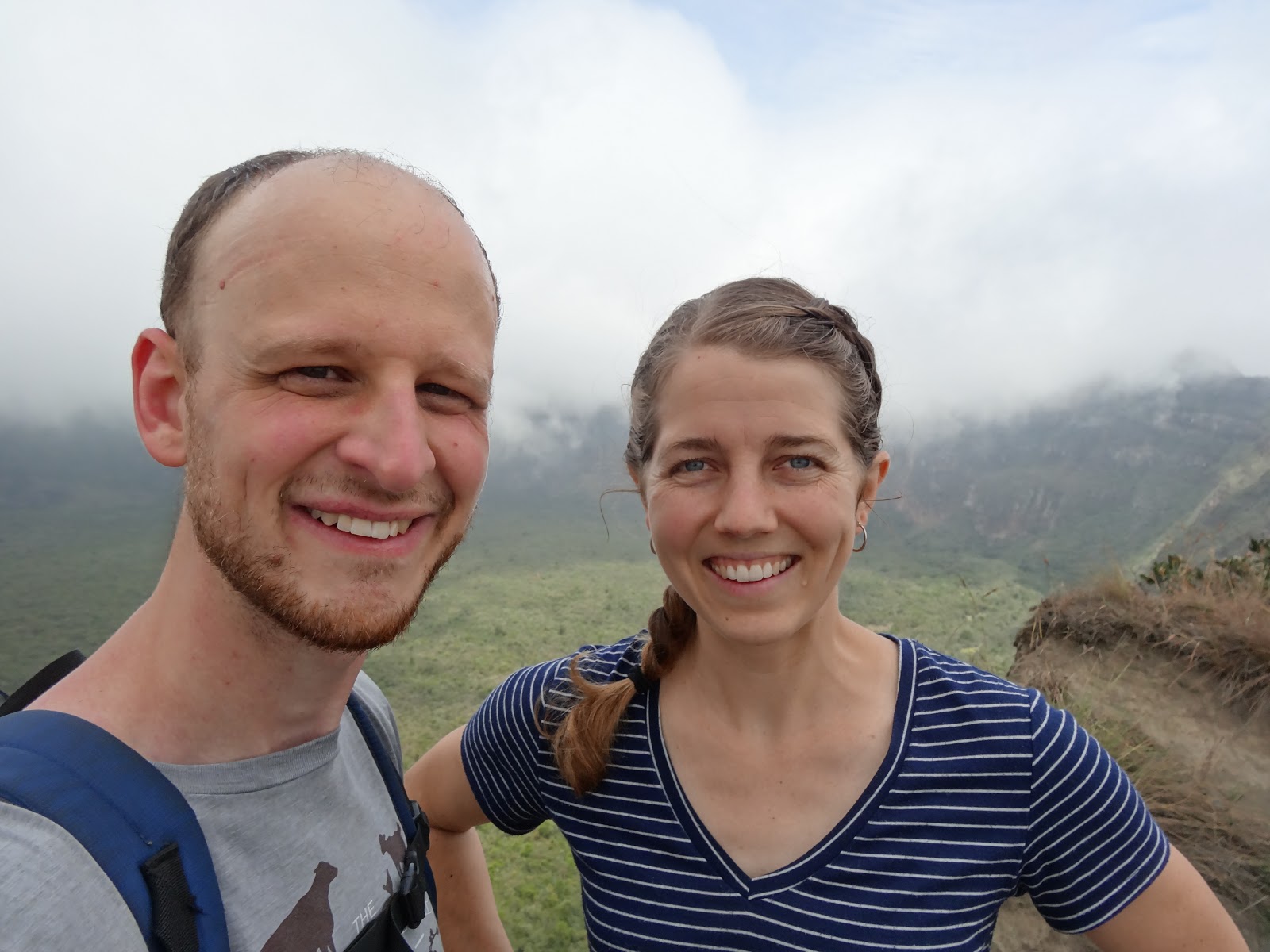
We went on a short trip to celebrate our anniversary.  We stayed next to Lake Naivasha for one night and we walked around the lake seeing many animals, and the next day we hiked at Mount Longonot amidst other animals.  Here are pictures first from the lake:

A dung beetle hard at work, the dung was a bit smaller than a tennis ball:


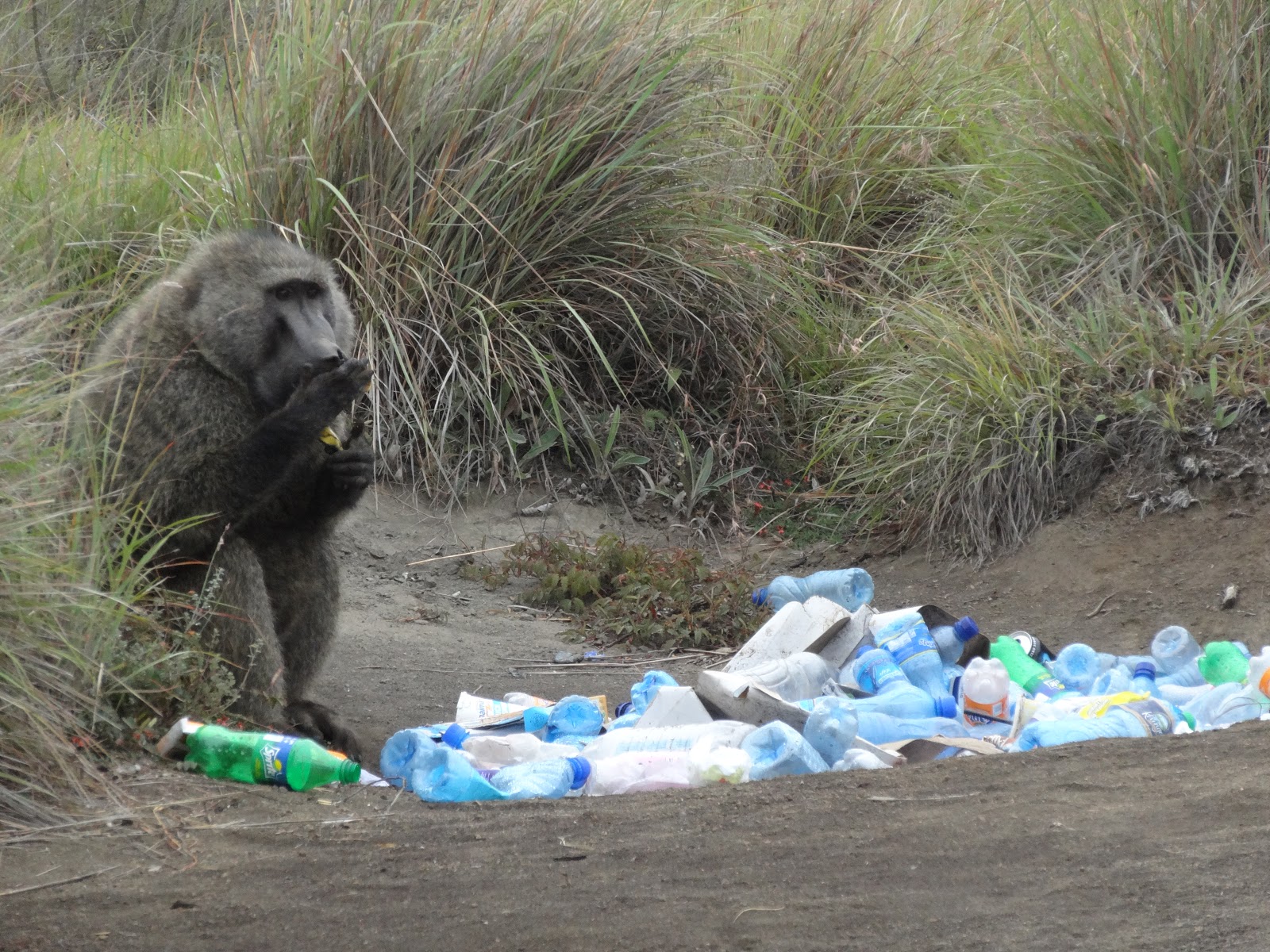
Some beautiful sights but not so beautiful to see monkeys eating plastic:


In the picture below, you can see the giraffes and zebras in the bushes by the lake - we walked over there next to them:


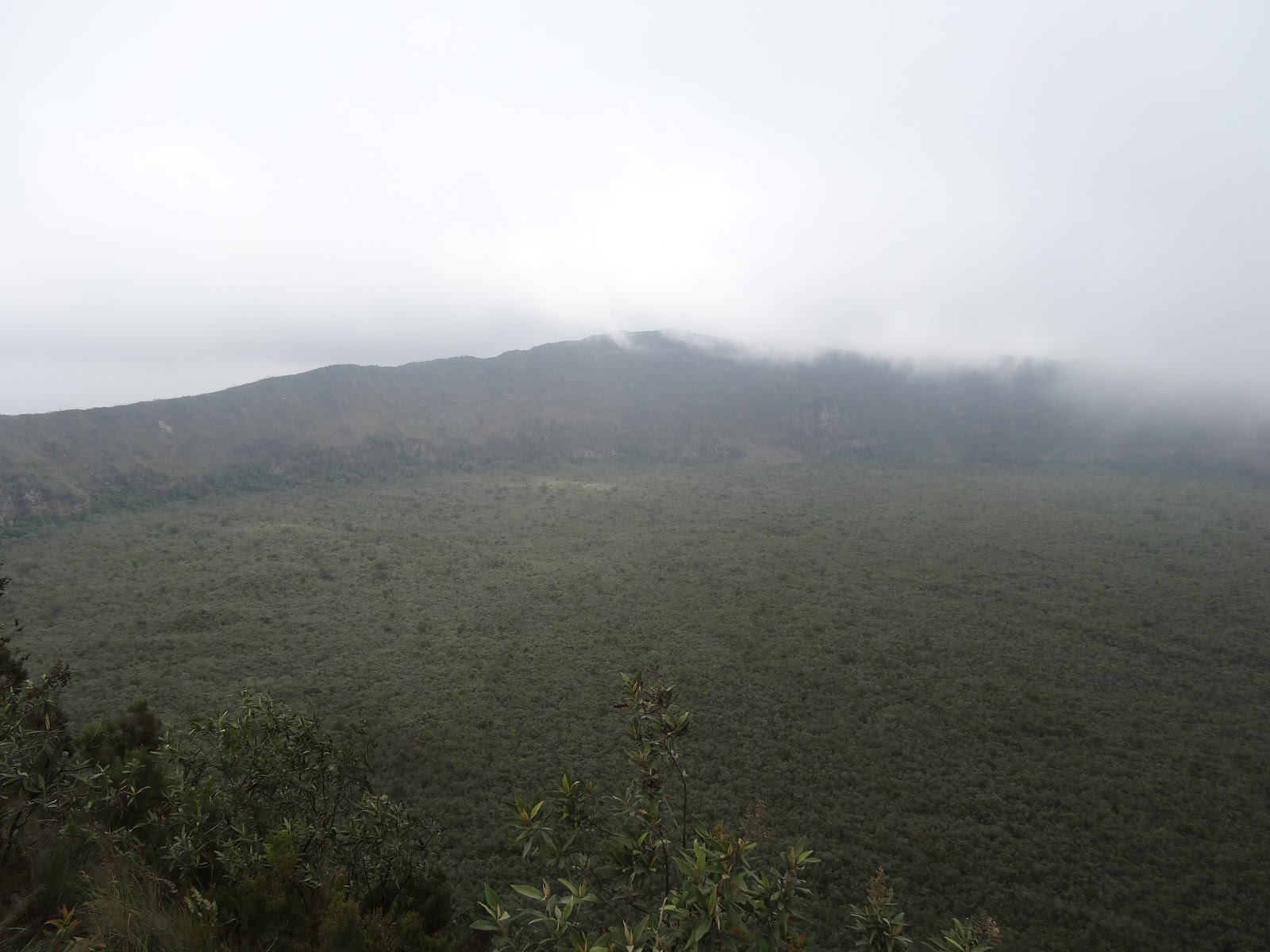
Then we hiked up Mount Longonot, which was very unique, since this time we were in the midst of a cloud. Go to this post to see what it looked like last time a few years ago.


Again, not everything was beautiful to see:


The fog made the hike interesting, total nothingness and drop off to each side, without being able to see the bottom:


Finally, as we were finishing up the hike and about to start going back down the mountain, the clouds started to clear a bit so we got better views.


Wednesday, August 16, 2017

Hospital Visits

By Sara:

While practicing Swahili by reading the book of Ruth in the Bible (in Swahili), Anthony and I came upon our new favorite phrase "usiku wa manane" which means "in the middle of the night" (the time when Boaz woke up and wow! a woman was lying at his feet!).

Part of living at Berea College has, to our surprise, required taking students to the hospital "usiku wa manane".  Obviously, this is not a fun part of our work.  But we thought you might be interested to hear why we are taking students to the hospital and what it is like to be at a hospital here.

When people go to the hospital in the US, it is usually for some extreme reason because, if you get sick with a cold or the flu or have a headache, you probably have some tylanol or cold medicine or something in your cabinet at home (or you can just drive over to the store to buy it).  So you take that, drink some broth, and rest until you get better.  Here, however, most people don't keep any kinds of medicine at home (or have a personal vehicle), so if you get sick and need medicine, you need to go get it somewhere else, which is more work than it would be in the US.

Sometimes, we take students to the hospital for migraines or stomach pain or because they think they might have malaria.  According to the students, one always feels worse lying in bed at night, which is why that's when they usually decide they need to go to the hospital.

When we go to the government hospital, sometimes there isn't a doctor on duty.  Once, I went with a student and we had to wait around while someone searched out a doctor.  Other times, the student decides they want to go to a private clinic (which is more expensive, but usually has a doctor on duty).  Regardless of where you go, the first thing you do is pay the consultation fee.  Then, you wait until a doctor is available.  Then, you go in to see the doctor.  If they decide you need a blood test or injection, they write a note that you need it, you go back to the cashier and pay for it, then wait until you get called to actually get the test done.  After they give some kind of diagnosis, the doctor might prescribe some drugs, which may be available to buy there at the hospital, or we might have to take a detour to a pharmacy on the way home so the student can buy them. (As a side note, you don't actually need a prescription to buy drugs at a pharmacy - you just need to know which ones you need.)  Other students always come along with us and the sick student; those healthy ones take care of paying for different things so the sick student can sit instead of having to go back and forth all over the hospital.

Hospitals are just no fun wherever you are in the world. 

Wednesday, August 2, 2017

Random Pictures and Events

Here is a video of Sara cutting the grass. We don't always do it, usually we pay others to do it because of the time involved.


I took this video mainly for my parents who grew up in Japan.  But you all may enjoy it.  Our vehicle speaks to us in Japanese every time we turn it on.  It said Merry Christmas to us once (on Christmas) in Japanese too.


Wildlife around the house:


I brought home a chameleon during one of my jogs, so it wouldn't get killed by people (who kill them because they think they are poisonous).  But a day later, I think it ended up fighting with another chameleon in our yard.  Two chameleons suddenly fell like 20-30 feet from a tree in our yard.  They were fighting each other fiercely once they landed back on the ground.  We separated them to different areas of the yard.  My brother made me laugh really hard when he said - "You thought you were helping the new one, but you ended up threatening the local economy by doing so: #whenhelpingchameleonshurts"


Just imagine if this slug was crawling across your leg.  Nasty


We went to our friend Edward's wedding in Uganda. So here are some wedding photos and photos of us with World Renew friends.


Our friend David looked really awesome in his traditional African attire:


Some beautiful photos of our neighbors working in the tea fields here (photos taken by Tammy Stevens who visited us a while back from Michigan)


Recently, the secretary here at Berea College, Pharis, invited us to come to a youth rally at his church.  He invited me to speak on the subject of integrity.  It went really well.  I spoke with about 70 youth for an hour and a half about integrity, corruption, pornography, etc.  A youth here is someone in between about 16 years old and 35 years old.  You generally remain a youth in other people's eyes until you get married.  Most of the youth at this rally were 18 to 25.

At one point I asked how many had cheated on an exam before.  I didn't expect anyone to be honest and raise their hands.  But at least 2/3 of the people raised their hands.  I was pretty blown away by this.  I appreciated their honesty, but it makes it hard to trust when you know so many people cheat in this culture.  When I asked how many look at pornography on their phones, no one raised a hand.  That one appears to be one that is harder to be open about.  It continues to be interesting to me how different cultures hate some sins worse than others.  In the US we really really hate corruption and cheating.  Here, those things are commonplace.  Maybe one of the sins they hate most here is selfishness, people who don't care for their families and communities or who don't provide help in times of need.

It was a great event, with some really wonderful and beautiful singing, except that, like all youth everywhere, it seemed like they had the sound system turned up to 10,000 decibels!  There was also a moving time of youth proclaiming peace through song as they prepare for the upcoming election and they are all hoping there won't be violence this time.  I also really appreciated that there were several other non-Anglican church youth groups there.  We heard at least 10 different choirs.


Our friend Pharis is on the left in the picture below, one of the youth himself:


Last, I was invited to introduce Timothy Leadership Training in Kapchorwa, Uganda to a group of missionaries and teachers of church leaders from Uganda, Kenya, and the DRC, and a few other countries. They are with the Trinity Center for World Mission and were interested in the very interactive type of teaching methodology that TLT offers. I was only there for a day, and although the travel was really tiring, it was nice to be back in Uganda and to meet all of these great people.


Thursday, July 27, 2017

Teaching Old Testament

By Sara:

You may remember that I was teaching a class on the books of the Old Testament during the past school term.  The term is over, students have gone home for the holiday, and grades are marked, but there's still opportunity to share with you about the class.


I really enjoy teaching about the Old Testament.  I have always loved reading the Old Testament, so I like being able to help the students appreciate it as God's word too, since many of them don't have lots of knowledge of the Old Testament or an understanding of why it is still important for Christians.

With this Books of the Old Testament class, we had to cover all 39 books in one semester, so I sometimes felt like I had to rush through it.  However, we did still have good discussions about serious questions the students had, which came up as we studied the Old Testament.  Maybe they were just trying to get off topic, like all students :) but they kept asking such good challenging questions that I finally started leaving an extra ten minutes at the end of class for us to discuss the tangential questions they asked during class or any other things they wanted to discuss.

I think that the biggest issue and question that the students kept asking about was how God allows righteous people, or Christians specifically, to suffer.  We spent a lot of time on this when we looked at the book of Job, but some other times it came up were: when we covered Genesis (Joseph getting sold into slavery and then thrown into prison for doing the right thing), Daniel (Daniel getting thrown into the lions' den because he refused to stop worshiping God publicly, his friends refusing to bow down to an idol whether God saved them from the fiery furnace or not), and Jeremiah (who was put into a cistern, mistreated, and continually mocked for speaking God's word to people).

The students know from experience that Christians do suffer, but it was hard for them to know how they could respond to suffering people in their churches, especially when so many people have the view that God will fix all of your problems as long as you have enough faith.  It was helpful for them to look at examples from the Old Testament of people like Jeremiah who didn't really have a happy ending to his story.  Or Joseph who went through years and years of suffering for God's ultimate good purpose, even though he didn't know what that purpose was until much later.

The issue of being saved by God's grace, rather than through works came up a lot also (mostly in the end-of-class discussions).  One of the students explained that he believes that God saves us by our faith, not through our works, but he wondered how he could teach that to his church.  He was afraid that if he told people in the church that they were saved by grace, they would just go out and do whatever they wanted instead of trying to do what was right.  To face this topic, we talked about how even in the Old Testament, people were saved by grace and then because of their salvation, they tried to obey God out of gratitude for what God had done for them.  For example, Abraham had faith and it was counted as righteousness.  God saved him even before Abraham demonstrated his faith by being willing to offer Isaac as a sacrifice or do the other things that God commanded him to do.  If we really are saved, we won't be asking what we can get away with doing under God's grace.  Like Romans 6:15 says, "shall we sin because we are not under law but under grace? By no means!"

I hope that these discussions gave the students more ideas for how they can address difficult issues in their churches.  I'm thankful that they have made the effort of coming to Berea in order to get better theological and biblical understanding and I pray that they will continue to grow in their relationship with God as they learn and serve him.