Like I mentioned before, while Edward, our supervisor, is in North America, I've been helping out with some of his work in his absence. One part of that is visiting the programs that KIDO and KMDP are doing to see how things are going and actually talk to the community members who are participating in the projects. Here are some of the things that are going on.
Allen, one of the World Renew staff from Kampala came for a few days and made the visits with me. She is so good at her job! I loved hearing her ask all the right questions of the community members to draw them out and get them talking about what they have been doing.
The first day, we visited community groups in Amuria where we heard about the livelihood skills that the people have been learning through KIDO, like improved methods for caring for pigs and chickens and running village savings groups. Ben was with us that day and amused people by deciding he would be more comfortable sitting on the floor of the church (which is made from cow dung, by the way).
Another day, we visited Kaberamaido, where KMDP is doing a project to help prevent the spread of HIV. They have community groups who meet in a fishing village right next to Lake Kyoga.
I got to sit in on a Stepping Stones meeting of married men. Stepping Stones is this really awesome curriculum for training people on HIV and communication between men and women and in the family. That day, they were talking about what love is and how you can/should show your love to your wife and children.
Our vehicle got overrun by sheep while we were away.
The last day was also in Kaberamaido, but visiting people who have been learning about conservation agriculture, especially green manure/cover crops (gm/ccs) for improving their soils.
They showed us the organic pesticides and fertilizers that they learned to make from local materials.
And the different techniques for kitchen gardens near their home. One lady said she loves just being able to stick her hand outside her house to pick greens for dinner!
Here's another kitchen garden.
And the seeds from two of the gm/ccs (mucuna and jackbean) drying in the sun. The groups started with a small amount of seed and are multiplying them to share amongst the members.
It was good to see and hear the ways that people are being impacted by KIDO and KMDP's work.
Working with Resonate Global Mission to equip pastors and farmers for God's glory.
Thursday, November 13, 2014
Katakwi TLT - Caring for God's People
Last week I began the first week of Timothy Leadership Training in Katakwi. It went very well, though we only had about 20 participants. However, there is blessing in this also. With a smaller group the discussion is much more rich and people get more chances to speak. It also allows me to really get to know some of the pastors.
Sara and Ben sat in with me for the first day to see what the training is like, but then they had other work to do during the week. Ben is a friend of ours from the farm we were trained at in Texas. He was already in Kenya on a trip so he came to visit us for a couple weeks.
Here is a picture of my co-trainer Lazarus, a pastor of Victory Outreach denomination. He just became a master trainer with the rest of the Soroti TLT group. God has blessed me richly with passionate, sacrificial, godly, and wise fellow trainers.
I've already written much about this TLT manual in other posts, so I won't mention all the good conversation, but I just want to tell you about the topic of healing this time. Each lesson takes between 1 and 2 hours. We spent nearly 5 hours on the healing lesson and that was with cutting the conversation short!
When we began the lesson, most of the group believed that God heals us every time we pray with faith. I let them hash it out together for a long time before I did any speaking. After hours of discussion everyone was in agreement that God always has the power to heal, but sometimes may not heal us. Sometimes suffering in our life is part of his will and plan. It turned out that at least some of the difficulty was a translation issue. Some people were thinking God heals every time, and some people thought God heals any time. Finally we were all on the same page that God heals any time, but not every time! It was a very good discussion, in which we totally dismantled the health and wealth gospel. People realized that God's will is important, not just the strength of our faith. Before, most thought that if you pray with faith for God to give you ten vehicles, he will give them to you. But now they realize he will only give to us according to his good will and purpose. We went over many passages of Scripture about suffering in the Christian life, looking at the life of Jesus and Paul especially.
In the discussion, we were all able to agree that God can use medication and doctors to bring us healing, and he gets the glory even in that situation. This is so important because there are still some preachers out in villages that counsel people to throw away their medication, and often these people die. One interesting thing was that some people were under the impression that God heals certain things like malaria or sicknesses, but in the case of a car accident, God won't or can't heal, and you need to take someone to the hospital. So we also discussed and agreed that God can do anything and heal anyone regardless of the situation.
As you can see in the photo below, it wasn't all tense discussion. We had a good time too!
Another aspect of the healing discussion was about traditional medicine, witchdoctors, and local herbs. This might seem like an easy issue to you back in the USA, but it is very complicated. You have witchdoctors who are helping to heal people, truly helping, but doing so with religious rituals leading people away from Jesus. While they may not be followers of Jesus, they do know of herbs that really work to help with sickness, many of the very same herbs that get used to process our drugs back in the USA. So what should people do about clinics that use traditional medicine? And should Christians go collect herbs from the forest to treat their problems? We might quickly say "yes!" as long as its divorced from the religious rituals, and even development organizations often teach people about such valuable plants that God created. But there are complications. Firstly, many people incorrectly dose these herbs and hurt people, or they don't clean them correctly and people end up getting other health problems or worms in the process. Secondly, this can easily be a stumbling block as the apostle Paul talks about. It can lead people into thinking that witchcraft is okay. So it's a tricky process, and most of the pastors were counseling that yes, those herbs God created can be used, but it needs to be a slow cultural change so as not to lead people astray.
Last in this lesson, it came out that not only the participants, but especially those in their churches fear death. They trust in Christ, but there is still fear of God's judgment for sin after death. We discussed the Gospel, that Jesus took the punishment for all of our sin. It seems like everywhere Sara and I go, and every sermon I preach, we are continually hitting the message that we are saved by grace, not by works. Maybe it is the lack of discipleship and teaching in Uganda, but it seems like most people believe that we are saved by faith in Christ, but also we have to make sure we do just enough to scrape our way into Heaven.
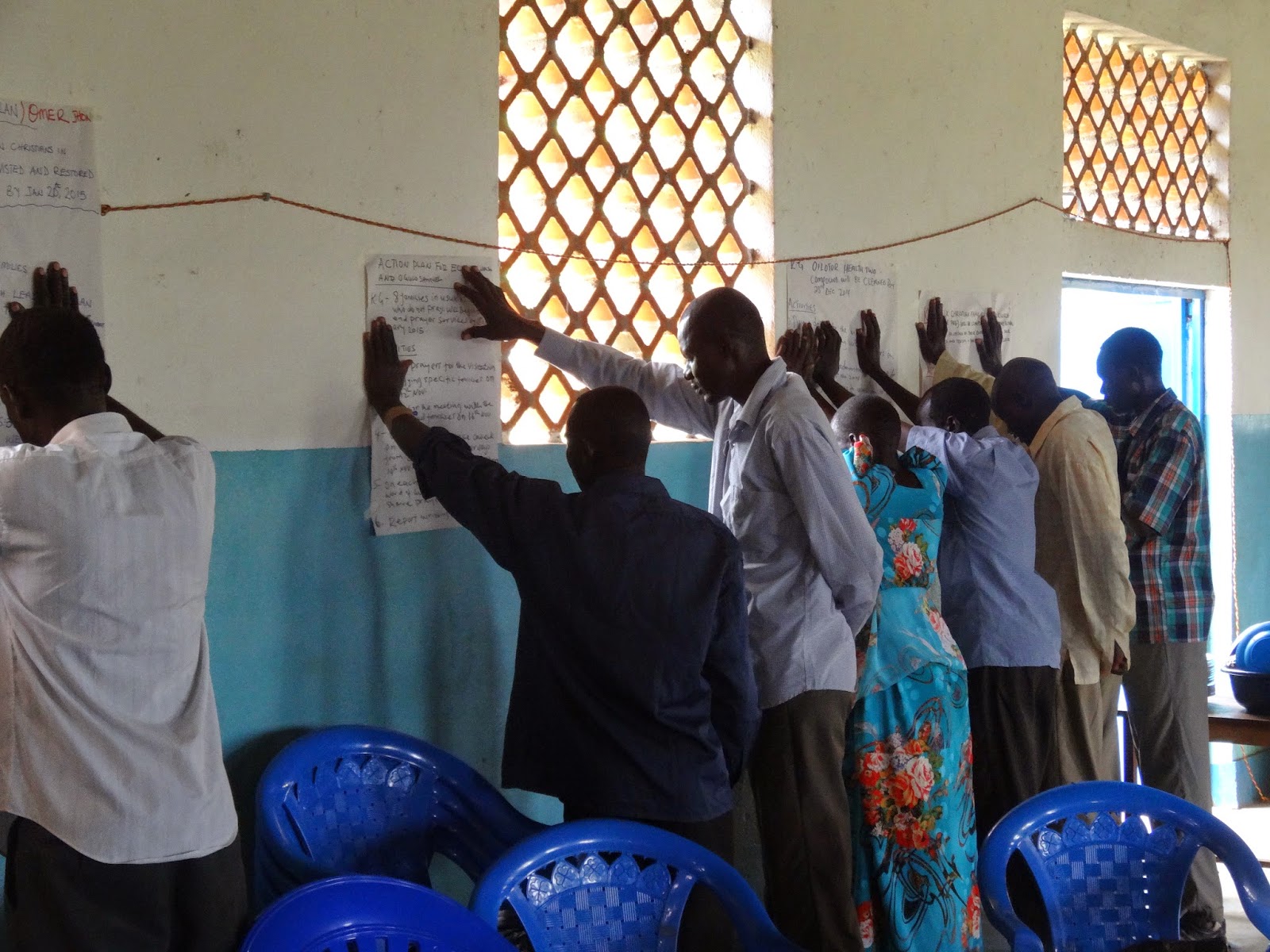
Here are some photos of praying over their action plans.
I'm very excited to see how God will use them. Some are going to begin visiting their Christians regularly. Some are going to train other pastors in this whole TLT manual. A few ladies are going to visit the hospital regularly to pray for the sick. One church is going to clean the grounds, and cut back "the bush" at a health clinic. Others are going to try to reconcile people back who left the church.
Here are our gracious and joyful cooks from the week. I ate well!
Testimonies:
“I am satisfied with this training, and especially on the side of healing, I really learned that God heals according to his will, and this has really lifted me up in my faith.”
“Next time when I come back I will bring for you any thing
which I am not going to tell you now.”
“I have learnt to share/work together as a team in church
ministry.”
“You need to have a plan in whatever thing you do.”
“We need to celebrate with people who have been released
from church discipline.”
Thursday, November 6, 2014
What we do when we are not doing exciting things
Maybe this isn't
something you think about when you read our blog, but on the other hand,
perhaps you are wondering what we do when we aren't doing exciting activities
like baking trainings, TLT, and visiting churches. Well, there are all sorts of relatively
mundane activities that we do as part of our work, which fill our time, and I
want to share a few of them with you.
Both Anthony and I
have the normal routine activities like cooking, cleaning, doing dishes, and
washing laundry. But that's just housework. When I have free time, I read, sew (I've
donated some clothes I made to the local church), and work in my garden where I
experiment with planting and creating mulch, compost, and organic pesticides. Although I do this for fun, it is helpful for
my work because I am learning what kinds of techniques do well in this region.
But there are lots
of "real" work activities we do too.
Our communication with our supporters through our blog and prayer
letters is an important part of our work, so we make sure to take good photos
and write stories about what is happening in our lives.
We also spend time
doing research and studying various topics to prepare training and teaching
materials. For example, I work on
lessons about caring for God's creation (in general and through agriculture)
and continue to refine my baking training materials. Anthony has been writing sermons and trying
to improve his When Helping Hurts curriculum.
We meet with
people from different mission and development organizations and from churches
to discuss the work we are doing and to plan ways that we can work together. For example, I have been advising a young man from our
church in Soroti who has started an agricultural development organization. We hope this will help enhance connections between all of us people from different Christian organizations who work in the same place.
I am doing
research with one of the Ugandan agriculture field officers on edible
wild/local plants in Teso (this region of Uganda). We're trying to compile information about
what plants are traditionally eaten and how.
While our supervisor, Edward, is in the US and Canada, I've been helping out by reading reports and project proposals from the partner organizations and working with them to revise them and make sure they will be understandable to an outsider who might read them. I've also been making visits to their current projects to see how things are going.
And currently, I
am planning with the main PAG church in Soroti to do a variety of trainings and
to set up a demonstration garden on some of the church's land. We want to do some comparison plots of
Farming God's Way and traditional farming as well as some demonstration kitchen
gardening (vegetable) techniques. And
then, the church wants to emphasize being good stewards of God's creation next
year, so the pastor asked me to put together some materials with Bible verses
and questions that small groups can discuss about caring for creation. So right now we are in the planning stages,
which means meetings and reading materials I have and writing plans.
So there you have
it. Some of the activities we do that
are individually less blog-worthy.
Food in Uganda
When we lived in Uganda before, we would occasionally share with you some of the foods we had been eating. So here is one from now. You may have seen some of these before, but we compiled some of the interesting things together here.
First, the monstrous portion of posho and beans that is common at events:
Termites (actually quite tasty):
Some tasty village food: millet bread, rice, cooked cucumbers, greens, meat:
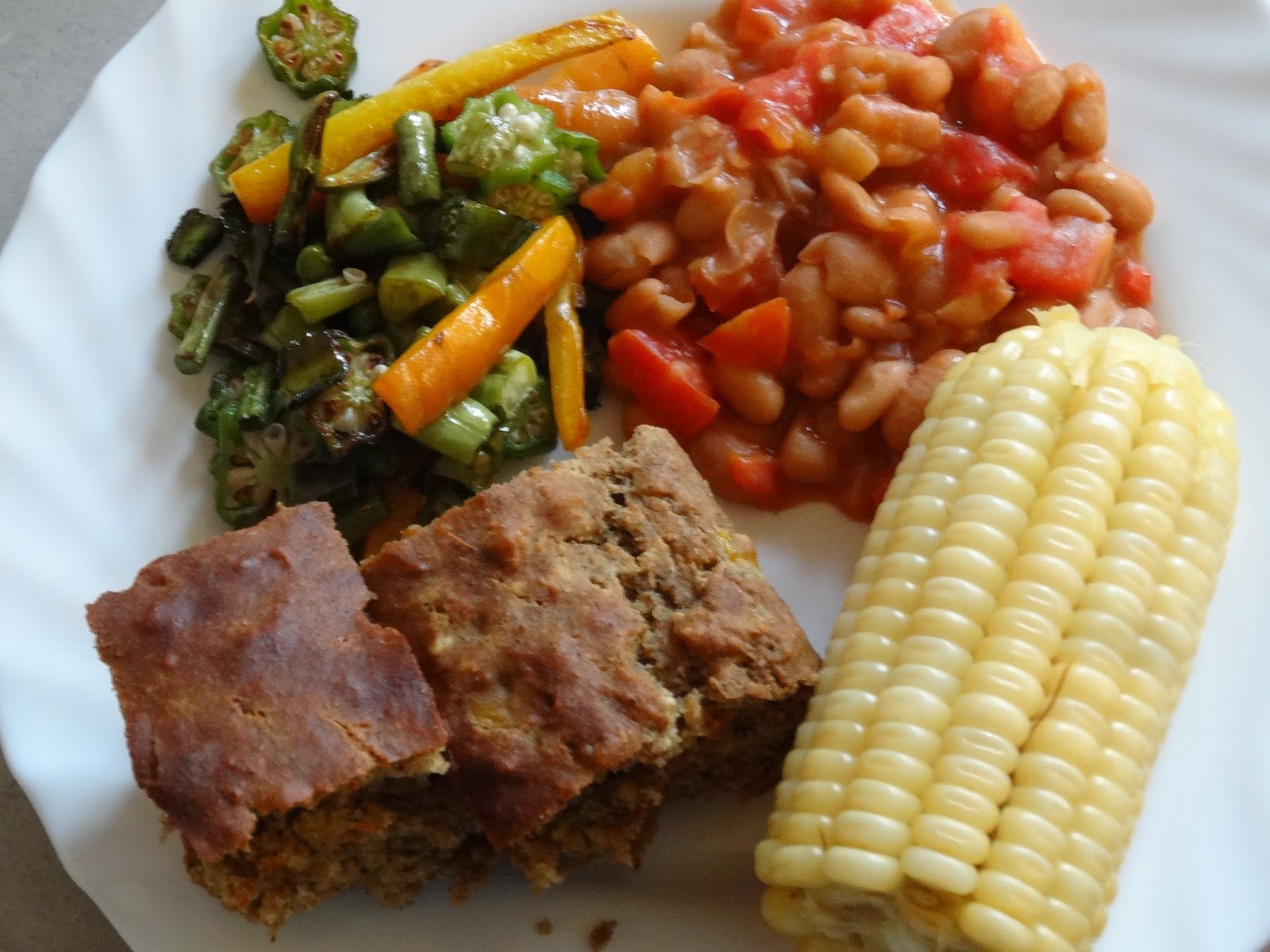
Home food: veggies from the garden, beans, boiled maize, banana bread (thank you, oven)
A special meal at home: cookies, tamarind juice, fish, posho, and greens:
Tostones (fried plantains):
Homemade paneer. This is actually quite easy to make.
A lunch that didn't require a whole lot of preparation: roasted maize, samosas, carrots, and peanuts.
And finally, hummus, veggies, and naan:
First, the monstrous portion of posho and beans that is common at events:
Termites (actually quite tasty):
Some tasty village food: millet bread, rice, cooked cucumbers, greens, meat:
Home food: veggies from the garden, beans, boiled maize, banana bread (thank you, oven)
A special meal at home: cookies, tamarind juice, fish, posho, and greens:
Tostones (fried plantains):
Homemade paneer. This is actually quite easy to make.
A lunch that didn't require a whole lot of preparation: roasted maize, samosas, carrots, and peanuts.
And finally, hummus, veggies, and naan:
Subscribe to:
Posts (Atom)