By Anthony:
Here is an article/devotional that I wrote:
https://network.crcna.org/global-mission/devotional-development-workers-and-missionaries
Thursday, March 19, 2020

Thursday, March 5, 2020
Fireless Cooker in Kabale
By Sara:
Part of my training in Kabale was on how to make and use a fireless cooker to prepare food, especially beans. I trained a group of about 20 people, but all of the people Anthony was teaching in a different room wanted to see, so they came for the "unveiling" of the beans. Here are some of the videos of what happened when we opened it up. First, lifting off all the blankets and feeling the heat still inside:
Next, opening up the saucepan and seeing the beans. Get a good look at peoples' faces when the lid is taken off! And listen for the reaction of the first person to taste them:
Then, a video of people being served beans and a testimony from one of the participants:
Finally, everyone getting a taste:
After seeing this, one of the people in Anthony's group (who wasn't even in my training!) decided to try it the next day. She said she always likes having beans, but there usually isn't someone home early enough in the afternoon to cook them for dinner. So she soaked her beans overnight, boiled them in the morning, and put them into the fireless cooker she made (picture below). That evening she went home and had beans for dinner!

One of the participants in the training is an agriculture field officer who trains community volunteers. He is excited about his plan to teach all his 70 volunteers how to make a fireless cooker so they can teach other people in rural areas. Too many trees are getting cut for firewood and charcoal, which is damaging the environment and making the cost of cooking fuel more expensive. He said this cooking method will be very useful for the people he works with.
Part of my training in Kabale was on how to make and use a fireless cooker to prepare food, especially beans. I trained a group of about 20 people, but all of the people Anthony was teaching in a different room wanted to see, so they came for the "unveiling" of the beans. Here are some of the videos of what happened when we opened it up. First, lifting off all the blankets and feeling the heat still inside:
Next, opening up the saucepan and seeing the beans. Get a good look at peoples' faces when the lid is taken off! And listen for the reaction of the first person to taste them:
Then, a video of people being served beans and a testimony from one of the participants:
Finally, everyone getting a taste:
After seeing this, one of the people in Anthony's group (who wasn't even in my training!) decided to try it the next day. She said she always likes having beans, but there usually isn't someone home early enough in the afternoon to cook them for dinner. So she soaked her beans overnight, boiled them in the morning, and put them into the fireless cooker she made (picture below). That evening she went home and had beans for dinner!

One of the participants in the training is an agriculture field officer who trains community volunteers. He is excited about his plan to teach all his 70 volunteers how to make a fireless cooker so they can teach other people in rural areas. Too many trees are getting cut for firewood and charcoal, which is damaging the environment and making the cost of cooking fuel more expensive. He said this cooking method will be very useful for the people he works with.
Baking Cakes and Scones in Kabale
By Sara:
As part of my training time in Kabale, I had two days to teach a group from two Pentecostal Assemblies of God (PAG) churches about baking cakes and scones without an oven. They were a very focused group and caught on quickly.


Steaming a cake:

Decorating:


The maize cake (cornbread) was the favorite. After the lesson was over, some of the group stayed behind to make another big maize cake - doubling the recipe. And two days later, someone who wasn't even in the training had a participant share the instructions with her so she could make a maize cake too (she brought some pieces for me and Anthony to taste!)

Day 2: making scones


At the end of the two days, the participants divided into groups based on the church they attend and made some plans for how they will put their new knowledge into practice. Some of them planned to train young people in their church to make cakes and then will form a bigger group with those trainees to start baking cakes as a business. One lady planned to start baking scones and selling them near her home. But each person is definitely going to make a cake for their family within the next month!
Baking Part 2:
After returning home to Soroti, I received some pictures from one of the church groups in Kabale about how they put their baking skills into practice, so the below pictures are compliments of Sarah, who was one of the facilitators of this training in Rwakaraba PAG church.
I am always excited to see people putting their skills into practice and sharing them with others! My hope is for people to take what they learned and spread the knowledge rather than relying on me to teach everyone.
At Rwakaraba PAG, about 30 women and youth attended the training on baking cakes and scones:

Practical learning:


Some of the products from the training:


I think they have already improved on what they learned a couple weeks ago and produced some very professional looking baked goods!

As part of my training time in Kabale, I had two days to teach a group from two Pentecostal Assemblies of God (PAG) churches about baking cakes and scones without an oven. They were a very focused group and caught on quickly.


Steaming a cake:

Decorating:


The maize cake (cornbread) was the favorite. After the lesson was over, some of the group stayed behind to make another big maize cake - doubling the recipe. And two days later, someone who wasn't even in the training had a participant share the instructions with her so she could make a maize cake too (she brought some pieces for me and Anthony to taste!)

Day 2: making scones
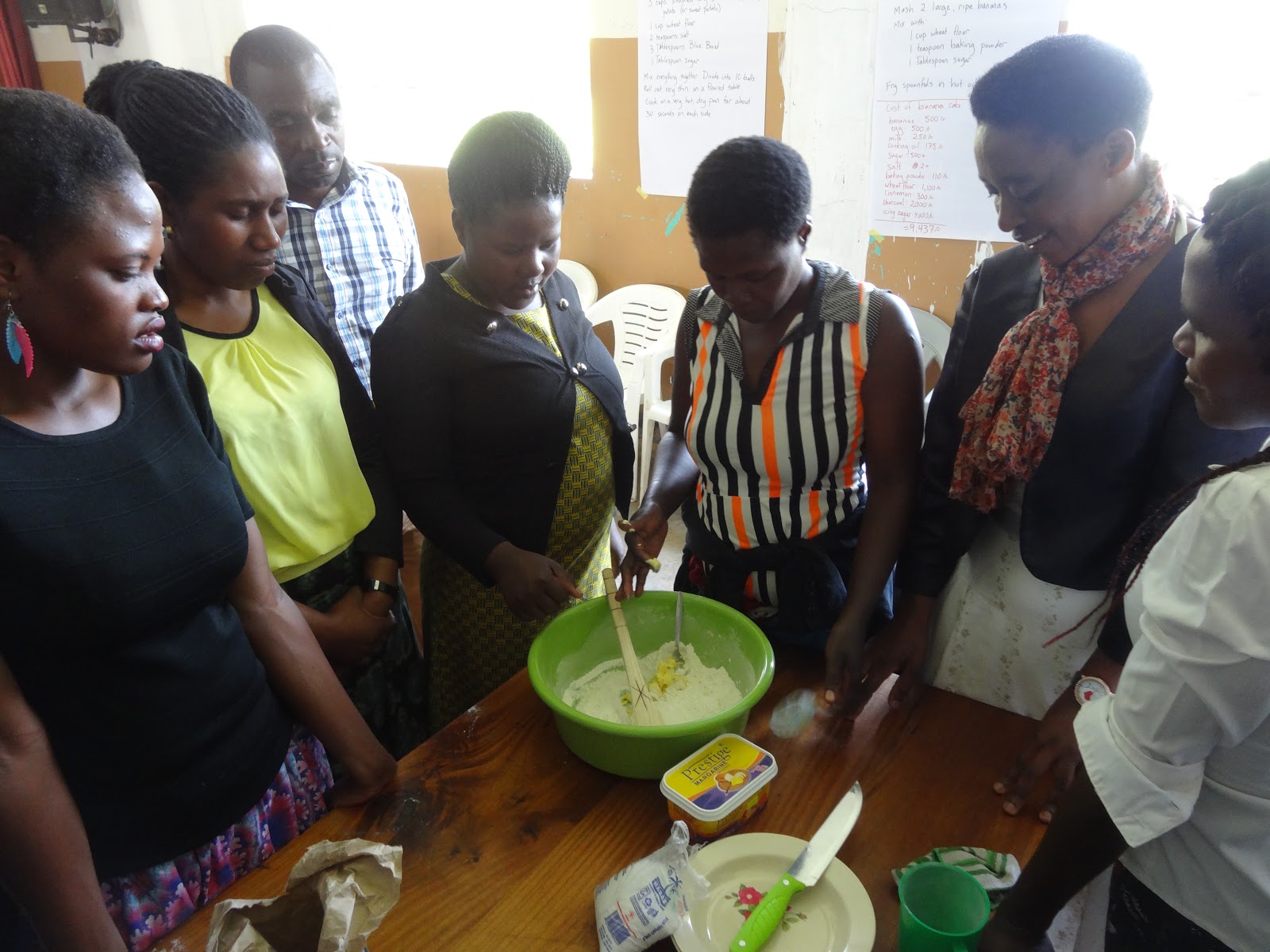


At the end of the two days, the participants divided into groups based on the church they attend and made some plans for how they will put their new knowledge into practice. Some of them planned to train young people in their church to make cakes and then will form a bigger group with those trainees to start baking cakes as a business. One lady planned to start baking scones and selling them near her home. But each person is definitely going to make a cake for their family within the next month!
Baking Part 2:
After returning home to Soroti, I received some pictures from one of the church groups in Kabale about how they put their baking skills into practice, so the below pictures are compliments of Sarah, who was one of the facilitators of this training in Rwakaraba PAG church.
I am always excited to see people putting their skills into practice and sharing them with others! My hope is for people to take what they learned and spread the knowledge rather than relying on me to teach everyone.
At Rwakaraba PAG, about 30 women and youth attended the training on baking cakes and scones:
Practical learning:
Some of the products from the training:
I think they have already improved on what they learned a couple weeks ago and produced some very professional looking baked goods!
Bible Studies and Agriculture in Kabale
By Sara:
One of the Ugandan organizations World Renew works with is located in the southwest of the country in a place called Kabale. Each year, representatives from all the Ugandan partner organizations get together with World Renew staff, so we have had the chance to get to know some of the people who work in Kabale with the Pentecostal Assemblies of God (PAG) churches in that area. The PAG Kabale pastors and development staff invited me and Anthony to come and share some of our trainings with them, but since it takes 2 days to travel from Soroti to Kabale, it took us a while until we were able to organize a visit which worked for everyone. They did a great job of inviting and coordinating different groups of people interested in the various topics we had to offer so Anthony and I could travel together and both have work to do each day. I taught Bible studies and agriculture to one group, and baking and the fireless cooker to another group.
Here's a picture of a beautiful evening in Kabale:

For two of my days of training in Kabale, I had a small group of people who joined me for Bible studies on creation and agriculture and some simple agriculture lessons. They were a committed group and very interactive. We had engaging discussions about the Bible passages and they all were able to make excellent plans for how they could obey what they learned from Scripture.


On the second day, a couple of the group members led the Bible studies so they could get practice being facilitators. They did a great job of asking follow-up questions and guiding the group through the Bible study steps. I am confident they will be excellent Bible study facilitators as they go out and put what they learned into practice.

One of the Ugandan organizations World Renew works with is located in the southwest of the country in a place called Kabale. Each year, representatives from all the Ugandan partner organizations get together with World Renew staff, so we have had the chance to get to know some of the people who work in Kabale with the Pentecostal Assemblies of God (PAG) churches in that area. The PAG Kabale pastors and development staff invited me and Anthony to come and share some of our trainings with them, but since it takes 2 days to travel from Soroti to Kabale, it took us a while until we were able to organize a visit which worked for everyone. They did a great job of inviting and coordinating different groups of people interested in the various topics we had to offer so Anthony and I could travel together and both have work to do each day. I taught Bible studies and agriculture to one group, and baking and the fireless cooker to another group.
Here's a picture of a beautiful evening in Kabale:

For two of my days of training in Kabale, I had a small group of people who joined me for Bible studies on creation and agriculture and some simple agriculture lessons. They were a committed group and very interactive. We had engaging discussions about the Bible passages and they all were able to make excellent plans for how they could obey what they learned from Scripture.


On the second day, a couple of the group members led the Bible studies so they could get practice being facilitators. They did a great job of asking follow-up questions and guiding the group through the Bible study steps. I am confident they will be excellent Bible study facilitators as they go out and put what they learned into practice.

Subscribe to:
Posts (Atom)