Thursday, October 16, 2014

Reflections on Farming God's Way

I recently had the opportunity to travel to Kijabe, Kenya for a Creation Care and Farming God's Way training with some of the agricultural staff from World Renew's partner organizations in Uganda.  There were five of us who drove there (it was a very long drive) and we arrived to lovely cool weather...at least in my opinion.  I appreciated the change after the heat of Soroti; Kijabe is near the top of the rift valley and the temperature was probably between 55 and 65 F the whole time we were there.  Some of my Ugandan colleagues suffered from the "cold" though!  Anyway, it was a beautiful place.


I could see Mount Longonot from the place where we stayed.  Anthony and I hiked up there when we visited Kenya in July.


Back to the training... I was hoping for more hands-on farming during the training, but we ended up in a classroom for most of the time.  Nevertheless, the material on creation care was great.  It was the same kinds of topics that I have been teaching on during the time we were at Pentecostal Bible College in Mbale and during visits to churches this year.  I appreciated the emphasis on a biblical basis for why we as Christians should care about the creation that God has given us responsibility for.  We talked about how each person has an impact on the environment through their actions.  And there was a lot of discussion on deforestation (which is a big issue since most people use either firewood or charcoal for cooking) and the importance of planting trees, especially native trees.  They also calculated the cost per month for using firewood, charcoal, or LPG (gas) for cooking for a family of four.  And I was surprised to find out that using gas is actually the least expensive.  And it does not cause respiratory issues.  The challenge is that you have to pay a lot of money to get the gas initially and then it lasts for a long time, whereas with charcoal and firewood, you can buy a little bit at a time.  People are used to frequently spending a little bit of money to buy something small instead of putting down a lot of money to buy in bulk.

Then, the other half of the training was on Farming God's Way (FGW).  Maybe some of you have heard of this before.  It is a technique for farming that starts with a proper understanding of the value of farming and farmers in God's sight (who was the first farmer?  God - Genesis 2:8) and a dedication to serving Him with everything.

FGW emphasizes timely land preparation where you get your field ready before the rains start so you can plant immediately and take advantage of the full rainy season.  It also emphasizes not ploughing, keeping the soil covered with mulch, and using proper spacing for the plants in the field.

In the little time we were outside of the classroom, they did a demonstration that showed how covering the soil with mulch helps to prevent soil erosion during rains.  Below, you can see it raining on the bare, ploughed soil.  See what the water running off the "field" into the pop bottle looks like.


And then the water running off the soil that was prepared exactly the same way, except covered with mulch.


We practiced making a rope with the spacing for maize marked out on it with the metal pop bottle caps.


And then using two of those ropes to mark out a rectangular field.


Then, we practiced setting up a field for planting.  The way you do it is to clear the land completely of weeds, then dig holes at the spacing for the plant you want to grow.  You put compost in the hole and then mulch the whole field.  The day after it starts raining, you plant your seeds.  Then, ideally in future growing seasons, you should never have to clear the land again.


Here are some of their demonstration plots where they compare the same crops, some grown conventionally and others grown using FGW.  In the picture below, you can see conventional potatoes in the front and then the FGW potatoes on the back left.


And here are onions, FGW in the front and conventional in the back.


Overall, I think that FGW is a very good way to do farming.  It is an important example of conservation agriculture.  I love how it seeks to honor God and value farmers and farming.  It is also great for reducing erosion and adding organic matter to the soil in the form of compost/manure and mulch.  It is also helpful in encouraging farmers to plan ahead and be prepared when the rains actually come.

But, just so you have a more nuanced understanding of FGW, I do have some concerns about the way it is promoted and some of the aspects of it.  I understand that it is good to talk about how we want to farm in a way that is pleasing to God.  And I do think that farming in a way that cares for creation is certainly pleasing to God.  But it makes me rather uncomfortable to call any one way of farming "Farming God's Way."  Is there really only one way that God wants people to farm in all climates and all contexts?  It makes the title of "Farming God's Way" seem a little presumptuous.  There is also an emphasis on monoculture in FGW, based on a verse in Leviticus, which I believe is taken out of context.  It seems strange to me that many of the aspects of FGW come from observations of nature (God does not plough the ground and allows plant material to cover the ground instead of leaving the soil bare), yet monoculture is promoted.  When I look at creation, I see God allowing many different kinds of plants to grow and thrive together.  I would not be too quick to insist that monoculture is better than intercropping before spending time carefully comparing them.  So I think that it would be helpful to do some research comparing intercropping and FGW.

One other example of something that was strange to me was the emphasis on using inputs like inorganic fertilizer and agricultural lime.  The training materials state that manure and compost are better than inorganic fertilizer and say that when you do FGW, you should not use inorganic fertilizers for more than four years - after four years, you should transition to compost or manure.  The materials also say that you can use wood ash instead of agricultural lime as a soil amendment.  I am a little bit confused about why they would promote inputs that farmers need to buy when many farmers are already keeping animals (who produce manure) and cooking with firewood (therefore creating wood ash every time they eat a meal).  It seems like it would make more sense to first promote what is free and easily available to the farmers, unless they are already using inorganic fertilizers on their fields and so would not have any extra expense from using them.  I would also suspect that if a person uses inorganic fertilizers for four years and gets used to them, that it would be difficult to stop.

Nevertheless, like I said before, FGW is a great way for farmers to improve their soils and their fields in a way that honors God.  I am thankful that I had the opportunity to attend this training and I look forward to trying FGW out with farmers here in Uganda.

Thursday, October 9, 2014

KIDO Evaluation

One of the activities that we participate in since we work for World Renew, is helping with evaluations of the projects that World Renew's partner organizations are doing.  An evaluation brings together people from World Renew, other Ugandan development organizations, and sometimes outside experts on the issue the project seeks to address.  The evaluations usually take place at the middle of the project and then at the end.  The one during the middle gives encouragement on what is going well and gives suggestions to help the organization improve on the work that they are doing.  The one at the end looks at what was accomplished during the project and gives suggestions to help prepare the organization for future projects.  The reason that these projects are for set periods of time is because they are generally funded through a specific grant from a specific donor, like the Foods Resource Bank (FRB) or Canadian Foodgrains Bank (CFGB).  After the project time is up, the organization has to apply for funding again.

You might remember when we came to Uganda in November 2012 to meet the people that we were going to work with when we arrived in Soroti in 2014.  Well, what we did during that time was to participate in the mid-term evaluation of KIDO's agricultural project.  This project ends in December of this year, so we just participated in the end of the project evaluation. 

During an evaluation, the participants spend a week with the organization staff, hearing from them about what has been going on in their project and also traveling around to visit the various sites where the project is implemented.  We get to talk to people who have benefited from the project and see how they have been impacted.

One person I got to meet was Teddy, the woman in the picture below.  She is part of a farmers' group that went through a training where they learned the importance of using their own local resources rather than waiting for someone to come help them.  She also gained confidence as a woman instead of feeling incapable and inferior as she had before.  So, she collected grass and made bricks from local resources, sold them, and earned enough money to build a permanent house.


One of the ways we learned what had been most important to the people who participated in this program was through a voting system.  Everyone got ten stones/nuts/seeds and then divided those stones up among the trainings that they had gotten from KIDO.  The ones that they appreciated the most got more stones.  People had fun voting.


In different places, we used different materials and pictures to represent the different trainings.


We saw one lady's field where, on her own initiative, she tried mulching a part of her maize crop.  You can see that there are absolutely no weeds on the right where she mulched, whereas there are many weeds on the left where she did not.


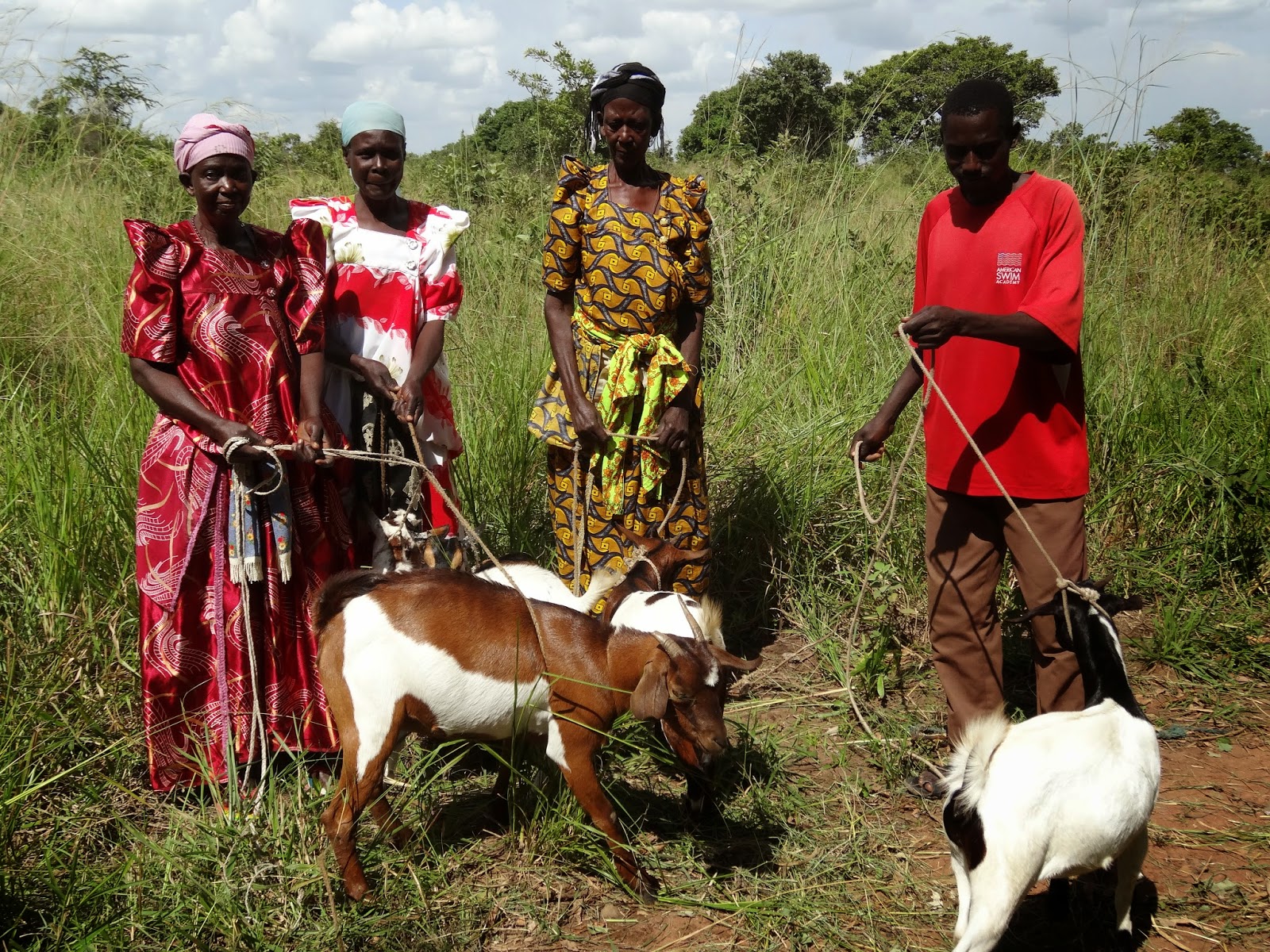
Many people brought animals to show us.  Some had received a goat through the revolving goat loan (you get a goat and give the first kid to someone else).  Others were the recipient of that first kid from the initial recipient.  And yet others had been inspired to use local resources to earn money so they could buy a goat or a sheep or a cow.


Of course as with any program, there were problems and challenges to address, but we enjoyed seeing the good fruits of this agricultural program and the ways that peoples' lives had improved because of their participation in it.

Interesting Pictures From the Last 2 Months

Here is a picture of the two men who work for us during the day.  They take turns working, week on and week off.  We have them so that when we are out doing trainings someone is here to watch our animals and keep the place secure during daytime hours (we have a night guard also).  On the left is Herbert and on the right is Paul.  We appreciate them both very much.  They are honest, hard working, and very caring for our animals.  And they both love the Lord.


I tried to get this picture of Sara with every animal we own (aside from the chameleons in the garden, maybe minus a chick or two).  I would have got it, but when Caleb saw me he ran toward me.  We have a lot of "feeding frenzies" like this in our yard.


Here is a video of a traditional African dance from our World Renew meeting in Entebbe in September.  It was part of our celebration for Andy Ryskamp's (co-executive director of World Renew) visit to us in Uganda and his upcoming retirement.


Something that I find very cool is that Sara visited a church somewhere in Kaberamaido throughout the course of her work, and look what she found on the wall of the church.  It's an action plan of one of the pastors who was at my TLT training!  It is so encouraging to see that he even shared his plan with the church and is committed to carrying it through.  In this plan, he wants to train other church leaders using the TLT manual on Caring for God's People.


Here we have our kitchen.  We realize you probably haven't seen a picture of it except for when we moved in and it was empty.  This is what it looks like after we get back from the market.  Can you spot my hidden treats?


We bought all this food below for about $7 USD.


Here we have my desk, my bald head, and my nearly perfect doggie.


Here we have Sara.  Some people need coffee, some need to hang out with their dog.  What Sara needs every day is a little goat cuddle time.

Thursday, October 2, 2014

Timothy Leadership Training in Kaberamaido - Manual 1

On September 16th - 20th, I kicked off Timothy Leadership Training in Kaberamaido.  World Renew works with the PAG (Pentecostal Assemblies of God) pastorate and development organization in Kaberamaido.  At this first manual of TLT we had 67 pastors, leaders, and development staff at the training.  We mostly met outside, and had to split into two groups because of the great number of people.


The first manual is about "Caring for God's People" which covers topics like pastoral visiting, guidance, healing, and reconciliation.  It was a very great week, and we even started on time!  Every day we began with beautiful worship as you can hear in the video below.


I did not go to lead this training alone.  I took three people with me who have been going through TLT in Soroti.  They are almost ready to graduate from the program.  It was a real joy to lead with them and not do it on my own.  And they were able to learn more about what it takes to lead and grow in their ability to facilitate TLT.  I had Pastor Moses from the main PAG Soroti church, and two members from his church, Agnes and Betty.  In the picture below is Betty with the red glasses.  Then Pastor Moses and Agnes are in the picture with me.


It is a good thing that I did not go alone because the morning I left to travel to Kaberamaido, I woke up with a sore throat.  But through the prayers of many of you as well as Ugandan friends, God gave me extra grace.  It was the strangest flu I have ever had.  Every evening at the guesthouse I experienced all the flu symptoms like sore throat and nose running like a faucet and exhaustion.  But I never had any problems during the training itself besides a little fatigue.  God is good.  All the time.  Also, it's fun to note that I stayed at the guesthouse for four nights and had eight meals there, and the total bill was only $60!

Everything was translated, but the translating was complicated because there were four different languages represented - Ateso, Kumam, Luo, and English.  We mostly got by using Kumam (their local language) and English, but had to use the others once in a while too for certain people.  This video gives you a little feel about how the group discussion goes.  Sorry that it is quiet.


We had some interesting discussions around the topic of healing.  We discussed for a long time until we could all agree that God does not heal every time we pray, but that it depends on his will and his plan.  I was encouraged to hear that everyone in the group believed it was okay to use medication and that we can still thank God for healing us through those means as well.  We had a discussion about using traditional medicine which I found interesting.  One pastor participant is the son of a witchdoctor.  He and others agreed that some of the traditional herbs do really work, and that they are the very plants that scientists use to make pills.  But many people were saying we should exercise caution, because even though we pastors know it's okay to use such plants for health reasons, others still associate them too closely with witchcraft and it could lead them astray.  As a missionary I might want to jump in and tell people it's okay to use such herbs, but I have to take the wisdom of these pastors and be cautious about being a stumbling block like 1 Corinthians 8 talks about.

Action planning is the most difficult and unique part of TLT.  We force them to have very careful, detailed, and specific plans.  Below is a picture of all of the participants getting ready to hear me teach about action planning.


I really enjoyed using the natural environment for putting up my teaching papers!


And here they begin to discuss and write their action plans.


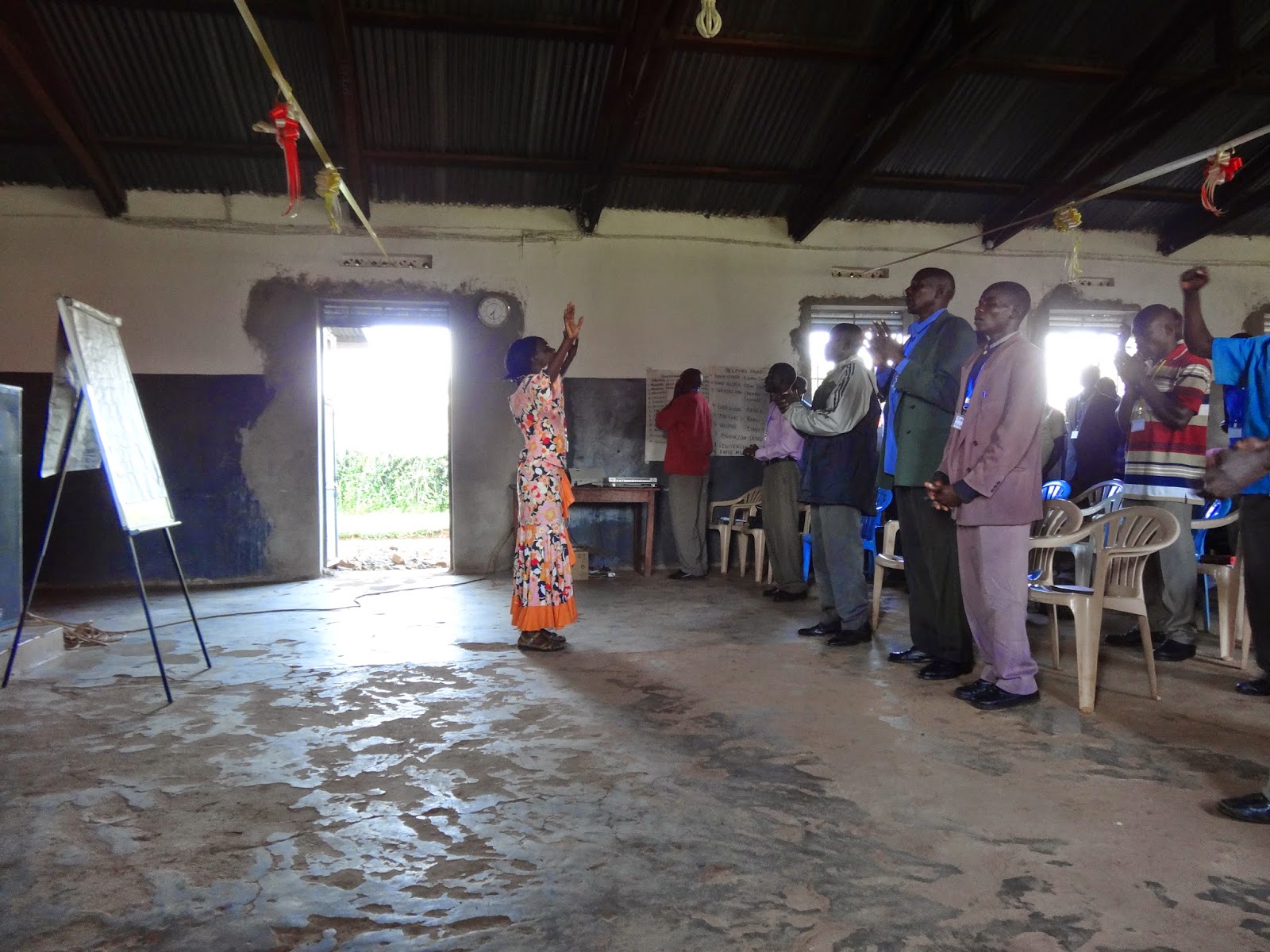
On the last day, we took time to pray over our action plans.  It was a very holy time.


This video gives you a little flavor of the prayer time.

Part of the prayer time was especially moving, as the prayer was a song, and each person prayed for their own action plan through the words of the song.

There were over 65 actions plans for me to read over and edit and pick apart.  Some of the members had to go back and rework their plans four times.  But by the end we had some very exciting action plans and I am so excited to see what God will do.   There were action plans about reconciling marriages and reconciling people who had left their church.  There were many plans about teaching TLT lessons or the whole first manual to other pastors and church leaders.  Increasing pastoral visits was another big theme.  Honestly, the plans that were most exciting to me involved courageous plans for evangelism.  The bishop's plan is to do evangelism in one neighborhood with the help of many of his Christians.  He hopes to have nearly 2000 people hear the Gospel at their homes, and he is expecting and hoping many of those to come to Christ and join their churches.

One unique plan involved caring for communities suffering from lack of food by doing Farming God's Way trainings at several churches.  Another unique plan was a pastor wanting to help his community dig 15 new latrines.  Below is most of the group holding their action plans.


I was also able to give the pastorate some of the theological books that all of you supporters donated!  They are going to stay at the center church for pastors to check out, or come to the church to read as they study for their sermons.  It is a tremendous blessing for them as most of these pastors own no books other than their Bible.

Testimonies from the Participants:
"TLT has changed my life, just to forgive people, I was bitter a lot."

"I have been having a heart of reconciliation but I have been missing the method on how to handle this subject.  But through the manual I have got an easy and simple way to handle it and I know God will guide me."

"I have been challenged to know that being a shepherd - pastor - is not a small thing in the way I have been thinking, but the pastor should be able to take care of the flock just the same way Jesus did thus he was able to call himself a 'good shepherd.'"
"TLT training was encouraging in the group discussion.  Everybody got to participate in answering questions and asking questions."

"I discovered the importance of time management."

"Caring for God's people needs you not to be a 'big person' and [not] 'selective.'"

"Concerning health, we should go for tests in the hospital."

"The training has helped me to learn the importance of drawing a work plan for every activity and kingdom goal leading to the successes of both our family and church ministry."

"Before TLT, I seemed to be over loaded at times or under worked because I had no work plan to follow.  As a result, I failed in many areas several times to do certain important issues as I found myself doing the less important programs yet leaving or forgetting the most important activities."

"The teaching also was balanced not only siding on spiritual aspects, but also on physical aspects of life like good health."

"The way you Anthony as a facilitator correct is by suggesting rather than forcing, an example to emulate."